
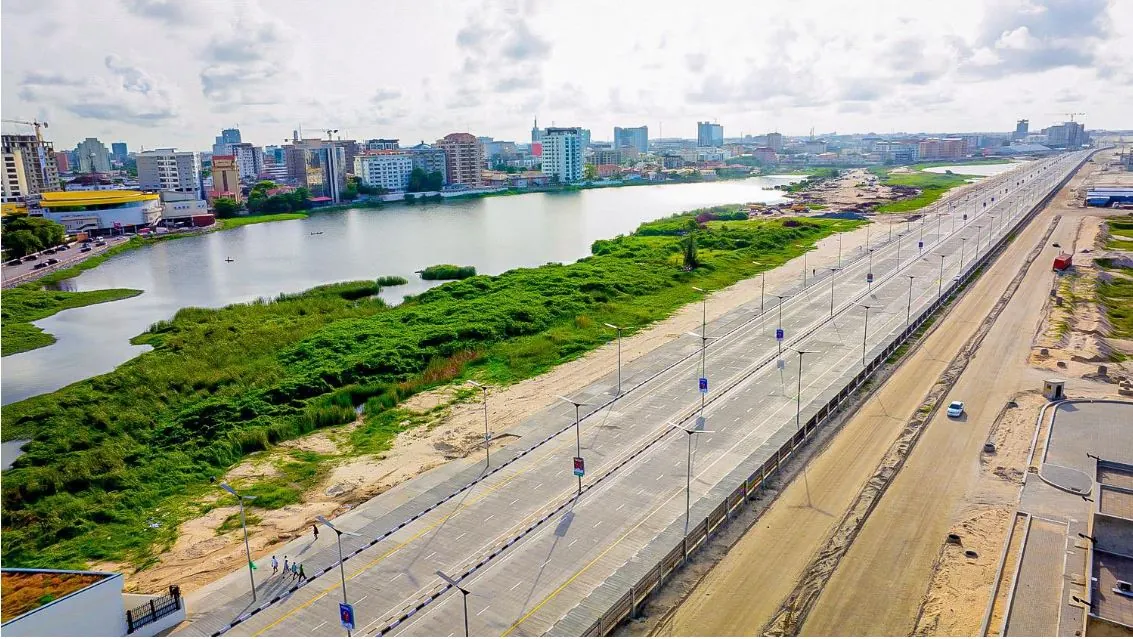
The recent headlines about the Lagos-Calabar Coastal Highway dispute have been dramatic, but behind the news is a very real situation for WinHomes and hundreds of buyers, many of them in the diaspora, who invested in the Okun-Ajah axis. Land disputes involving major government projects are never easy. They come with stress, uncertainty, and significant financial implications for developers and investors alike. While the Federal High Court eventually struck out the WinHomes suit on procedural grounds, the case reflects the genuine challenges investors face when trying to protect their assets in the middle of fast-moving national infrastructure plans.
On Friday, the Federal High Court in Lagos struck out the WinHomes suit against the Federal Ministry of Works and Hitech. The ruling did not address the merits of the dispute. Instead, the judge removed the case entirely on procedural and jurisdictional grounds.
Justice Akintayo Aluko held that the claimants brought the matter before the wrong court, lacked legal standing, used an inappropriate procedure, and sued parties that are not recognised as legal entities. In simple terms, the case failed before it even had a chance to begin.
For developers, Diaspora land buyers, and investors across Nigeria, this judgment offers valuable guidance. Below are the six factors that ended the case and the practical lessons they represent.
1. Wrong Court: The Matter Belongs in the Lagos State High Court
The central issue in the suit was land ownership and alleged trespass. These fall under the exclusive jurisdiction of the State High Court when the land is within a state’s authority. The Federal High Court only steps in when the Federal Government already owns and administers the land. In this situation, the land in Okun-Ajah was governed by Lagos State documentation.
Lesson: Do not file land disputes in the Federal High Court simply because a federal agency is involved. If the disagreement relates to title or trespass on state land, the proper venue is the State High Court.
2. No Locus Standi: WinHomes Had Already Sold the Land
WinHomes admitted that it had subdivided and sold most of the plots to buyers, many of whom are in the Diaspora. Once land is sold, the seller no longer has a legal interest that allows them to sue over that property. Ownership had already transferred to the buyers.
Lesson: A company that has sold all plots in an estate loses the right to litigate over that land. Buyers hold the legal interest. Developers who want to retain standing should structure transactions so the company keeps some form of registrable interest, such as common areas or a reversionary right.
3. No Reasonable Cause of Action
The court noted that even if all the facts presented by WinHomes were assumed true, the Federal High Court still lacked the authority to grant the reliefs being requested. This made the claim legally defective.
Lesson: Before committing resources to litigation, seek legal advice to confirm that the court you are approaching can actually grant the orders you want.
4. Wrong Procedure: Originating Summons Was Inappropriate
An Originating Summons is meant for cases where facts are not in dispute and the court only needs to interpret documents. In this matter, both parties had sharply conflicting versions of events. These included disagreements about notice, compensation, the 2006 alignment, and the level of development on the land. Such disputes require a full trial with witnesses under a Writ of Summons.
Lesson: When you expect the other party to contest your claims, do not use Originating Summons. Use a Writ of Summons and prepare for a full evidential hearing.
5. Wrong Defendants: Non-Juristic Persons Were Sued
WinHomes sued the Minister of Works and the Controller of Works in their official titles. These are not legal entities that can sue or be sued. Actions involving federal agencies must list the Federal Ministry of Works or the Attorney-General of the Federation as the proper defendant.
Lesson: Confirm the correct legal entity before filing a suit. Suing a non-juristic party can result in immediate dismissal or striking out of the case.
6. Case Struck Out, Not Dismissed
The court struck out the suit rather than dismissing it. This means it can be re-filed in the correct court with proper parties and procedures. However, practical realities make this difficult. By the time a fresh action is filed and served, the Lagos-Calabar highway construction through that axis may likely be far advanced.
Lesson: In infrastructure-related land disputes, timing is critical. Delays can make litigation ineffective once major public works have progressed.
What This Means for Developers, Buyers, and Investors
The WinHomes situation also highlights a difficult truth. Challenging the government, especially on matters tied to major infrastructure, is rarely straightforward. In Nigeria’s judicial system, the process can be even more demanding due to procedural requirements, delays and the high threshold needed to pause or alter projects considered to be in the public interest. WinHomes’ experience reflects the challenges any developer can face, even when they have genuine concerns and documentation.
The Lagos-Calabar Coastal Highway is a major national project, and courts are generally reluctant to issue orders that could slow or halt work viewed as serving the wider public. In the WinHomes case, there were allegations that the government did not fully follow the earlier route plan. This is a concern shared by many developers, especially where project alignments shift or existing gazettes do not match what is happening on the ground. Regardless of whether these claims are ultimately correct, the case shows how important it is to carry out detailed legal and technical checks before acquiring land or beginning development near any state or federal corridor. Understanding gazettes, past alignments and the possibility of route adjustments can be the difference between a secure investment and a future dispute.
For developers, estate companies and property investors, open dialogue is often the best first step. Engaging affected communities, reaching out to the relevant ministries and clarifying alignment details early can prevent disputes entirely or ensure that any objections are well-documented. Where litigation becomes unavoidable, every procedural step must be handled carefully. The court must have jurisdiction, the right entities must be named, and the filing process must reflect the nature of the dispute. Anyone choosing to challenge government action should ensure their case is built on solid due process and a legally recognisable interest.
Staying informed, proactive and well-advised remains the strongest protection for securing one’s land investments, particularly in areas influenced by major public projects.
Key takeaways:
• Identify the correct court before filing any action.
• Retain some legal interest if you plan to defend or enforce rights over an estate.
• Use the correct procedure when facts are contentious.
• Sue proper legal entities, not office holders.
• Conduct due diligence on gazetted or proposed corridors for highways, rail projects, and federal acquisitions.
• Prioritise community engagement and political awareness before breaking ground.
For land verification, route checks, and professional due diligence, Land.ng offers support to help buyers and developers avoid unnecessary risks.


Join The Discussion